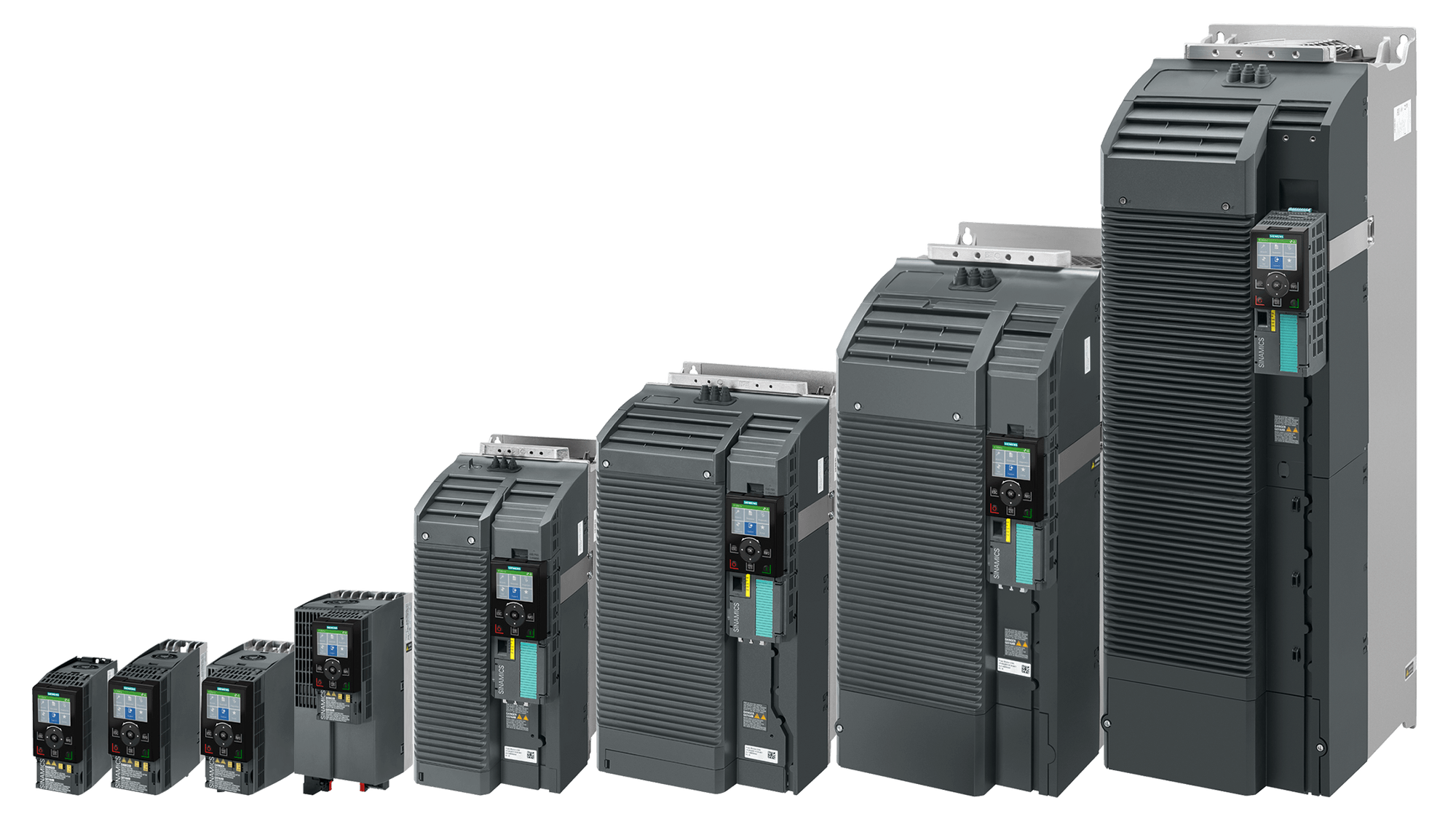
Siemens SINAMICS drives are trusted across manufacturing and process industries for reliable motor control, energy savings, and smooth integration with Siemens automation systems. But even a great drive can fault frequently or fail early if it’s installed, wired, and grounded poorly. This guide covers best practices for wiring, commissioning, and maintaining Siemens SINAMICS drives (including G120, G120X, G120C, and S120) so your system runs stable for the long haul.
1) Safety and Pre-Installation Checklist
Before you touch any conductors, lock down the job site. Drives store energy and can present hazardous voltages even after power is removed.
- Lock out and tag out all power sources (including auxiliary supplies).
- Verify zero voltage with a meter—do not rely on indicator lights.
- Use appropriate PPE and insulated tools.
- Follow local electrical codes and applicable industrial standards (e.g., IEC / NFPA).
2) Mechanical Installation Best Practices
Mounting and Clearances
SINAMICS drives depend on airflow for cooling. Poor ventilation is one of the most common causes of overheating faults and shortened lifespan.
- Mount the drive vertically on a rigid, vibration-free surface.
- Maintain Siemens-recommended top/bottom/side clearance for ventilation.
- Avoid mounting near heat sources or in direct sunlight.
- Keep conductive dust, fibers, and corrosive vapors away from vents and fans.
Ambient Conditions
- Keep temperature and humidity within rated limits.
- Prevent condensation inside enclosures (use heaters/dehumidification if needed).
- Use proper enclosure ventilation or cooling when cabinet heat load is high.
3) Power Wiring Fundamentals
Incoming Line Power
Confirm voltage class and supply quality before energizing. Mismatched voltage or weak supply can cause nuisance faults and component stress.
- Connect incoming power to the drive’s input terminals (commonly L1/L2/L3 or R/S/T, per model).
- Verify the correct voltage class (e.g., 230 V vs. 400–480 V models).
- Torque all power terminals to Siemens specifications.
Protective Grounding
Grounding is essential for safety and EMC performance.
- Bond the drive’s PE/ground terminal to a low-impedance protective earth.
- Bond the motor frame to the same ground reference.
- Avoid long, looping ground paths and “daisy-chained” grounds where possible.
4) Motor Wiring and EMC Practices
Motor Connections
- Connect motor leads to U/V/W output terminals.
- Confirm the motor is suitable for inverter operation where required.
- Accurately enter motor nameplate data during setup (voltage, current, frequency, speed).
Shielding, Routing, and Termination
Good EMC practice prevents noise-related faults, protects sensors and networks, and reduces nuisance tripping.
- Use shielded motor cable in noise-sensitive environments or long cable runs.
- Route motor cables away from analog and communication wiring.
- Terminate the shield properly (ideally 360° bonding at the drive end, per Siemens EMC guidance).
5) Control Wiring
Digital Inputs
Digital inputs handle discrete commands such as start/stop, direction control, and fault reset.
- Use shielded twisted pair where noise is present.
- Keep control wiring physically separated from power wiring.
- Label conductors and document I/O mapping for faster troubleshooting.
Analog Inputs
Analog signals (0–10 V, 4–20 mA) are especially sensitive to interference.
- Use shielded cable for analog signals.
- Keep analog wiring away from motor leads and line power conductors.
- Confirm scaling and reference types in parameters to avoid unstable speed control.
6) Communication Integration
SINAMICS drives commonly integrate into Siemens networks for diagnostics, performance data, and centralized control.
- Typical protocols include PROFINET and PROFIBUS (model-dependent), plus other industrial Ethernet/serial options depending on configuration.
- Use industrial-rated cabling and follow topology guidelines (line/ring/star as applicable).
- Terminate networks correctly and keep communication runs separated from high-noise power wiring.
Tip: Standardize IP addressing, device names, and documentation so replacements can be swapped quickly without guesswork.
7) Safety Functions
Many SINAMICS drives support Safe Torque Off (STO) and other safety functions. These features help reduce risk—but must be wired and validated correctly.
- Wire STO channels according to Siemens safety documentation.
- Use safety-rated relays or a safety PLC where required.
- Validate safety behavior during commissioning.
Important: STO removes torque—it does not isolate line power. Always use proper isolation for service work.
8) Commissioning and Startup
A controlled startup prevents avoidable faults and protects equipment.
- Verify wiring against schematics and terminal designations.
- Check grounding continuity and shield termination.
- Confirm motor nameplate data and key control parameters.
- Test I/O logic (start/stop, interlocks) before running at full load.
- Start at low speed and low load when possible, then ramp up gradually.
9) Maintenance and Long-Term Reliability
Most drive failures are preventable with simple periodic checks.
- Inspect terminals for loosening and heat discoloration.
- Keep vents, fans, and filters clean for proper cooling.
- Monitor cabinet temperature and airflow.
- Back up parameters and keep replacement notes (firmware, comms settings, motor data).
- Review fault history periodically to catch problems early.
10) Common Issues and How to Avoid Them
| Issue |
Likely Cause |
How to Prevent It |
| Overheating faults |
Blocked airflow, high ambient temp, undersized enclosure cooling |
Maintain clearances, clean vents, improve cabinet ventilation |
| Noise-related faults |
Poor shielding, improper routing, ground loops |
Use shielded cable, 360° bonding practices, separate signal/power runs |
| Nuisance trips |
Incorrect motor data or parameter scaling |
Verify nameplate data, confirm control mode and scaling |
| Ground faults |
Insulation breakdown, moisture, wiring damage |
Megger checks where appropriate, protect cables, control condensation |
| Premature component wear |
Voltage transients, poor line conditions |
Use surge protection/line conditioning where needed |
Final Takeaway
Siemens SINAMICS drives deliver excellent performance—when installation fundamentals are done right. Proper wiring, grounding, shielding, and commissioning reduce faults, extend service life, and maintain production stability. If you want help selecting a SINAMICS drive, matching it to your motor/load, or identifying compatible spares, talk to an engineer, and we’ll help you build a reliable setup.


 2 Year Warranty on ALL products