Successfully Added
The product is added to your quote.


The product is added to your quote.

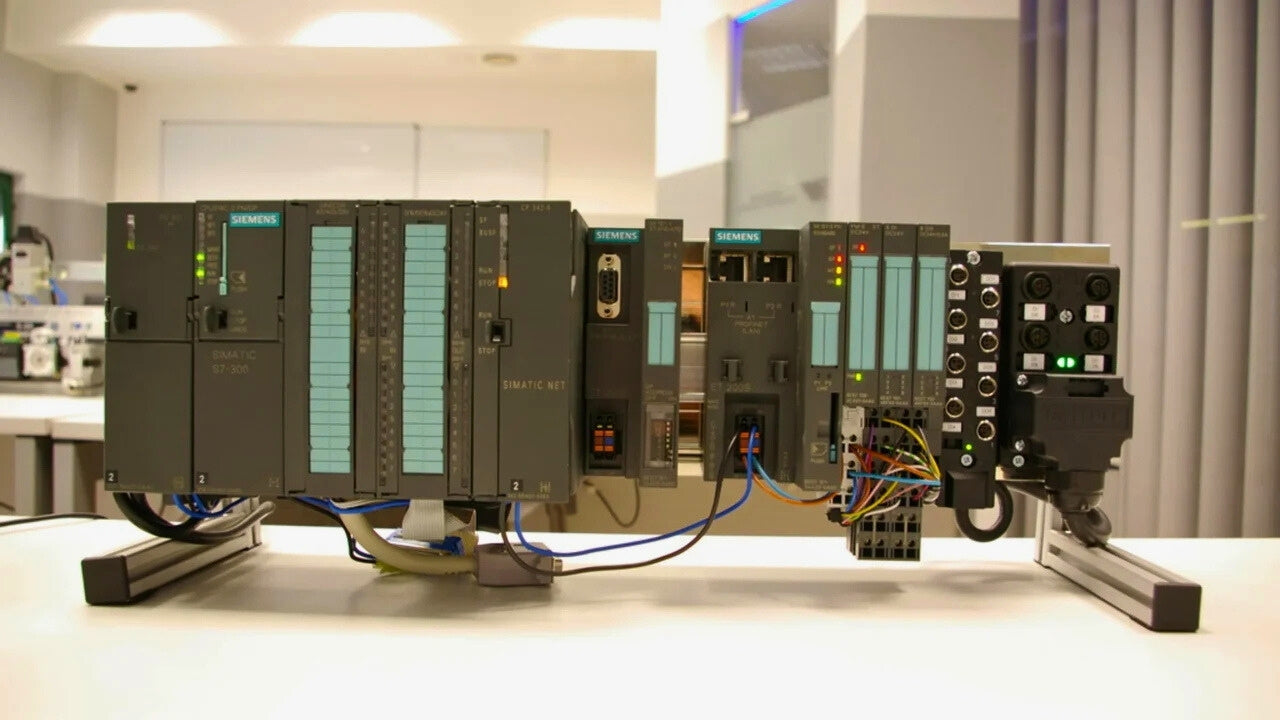
Walk through almost any modern factory and you will see something that surprises people outside manufacturing. Next to new HMIs, upgraded PLCs, and connected networks, you will often find industrial drives that are decades old still running day after day.
That is not always a sign that a plant is behind. In many cases, it is a sign that the system was built around uptime, proven performance, and risk control. Legacy drives stay in service because they keep production stable, because upgrades are rarely simple, and because the economics of downtime are unforgiving.
This guide explains why older drives still power modern factories, when it is smart to keep them running, and when it is time to plan a change.
Legacy automation usually means equipment that is no longer actively manufactured but remains functional, serviceable, and critical to production. Legacy does not automatically mean unsafe, unreliable, or unsupported. It often means the hardware is deeply integrated into machines with long lifecycles.
In the real world, many production assets are designed to run for 20 to 40 years. Controls and components cycle faster than the machines they operate. That is why legacy drives remain common even in facilities with modern supervisory systems.
Older drive platforms were often engineered during a time when durability mattered more than compactness. Many designs used generous electrical margins, robust heat sinking, and simpler internal architectures. That does not make every old drive better, but it helps explain why so many survive harsh conditions for a long time.
In a factory, tolerance matters. Dust, heat, vibration, and minor power quality issues can stress modern electronics. A drive designed with extra headroom can sometimes endure the real environment better than a design optimized primarily for size and cost.
Mechanical systems are frequently rebuilt, refurbished, and kept productive long after the original electronics are discontinued. Presses, pumps, mixers, conveyors, and extruders are often maintained for decades because replacing the entire machine is expensive and disruptive.
When the mechanical asset still performs, the drive becomes a reliability decision, not a fashion decision. Plants keep what works, then modernize where it truly adds value.
Replacing a legacy drive is often described as a quick replacement, but in practice it can turn into a larger engineering project. The drive may be integrated with the motor, panel design, braking method, process controls, safety logic, or operator workflow.
Common upgrade impacts include:
None of this is inherently bad. It just means modernization has an opportunity cost. When the existing drive is stable, the upgrade must earn its risk.
Maintenance teams often know legacy platforms extremely well. They understand normal behavior, fault patterns, and practical workarounds gained through years of experience. That familiarity can reduce troubleshooting time when a failure hits during a critical production window.
A newer drive may be more capable, but capability does not automatically translate into faster recovery. In the moment of downtime, clarity and familiarity often win.
Factories do not run on theoretical best choices. They run on what can be sourced, installed, and validated quickly. Lead times, supply disruptions, and procurement friction have made availability a major factor in automation decisions.
Many plants keep legacy drives running because they can secure a known compatible replacement faster than they can execute a full modernization project.
A common misconception is that legacy drives cannot be supported once a manufacturer stops producing them. In reality, many legacy drives remain serviceable through careful sourcing and proper verification.
Support typically looks like practical risk reduction, such as inspection, functional validation, and configuration checks before a unit goes into a live panel.
Keeping a legacy drive is often a smart decision when the system is stable and the risks of change are higher than the gains. This is especially true when the machine is mechanically sound, the process requirements are steady, and downtime is costly.
In those cases, the goal is not to cling to old technology. The goal is to protect production with the least risky path.
Legacy drives are not immortal. There are situations where planning a replacement is the most responsible move.
Consider a replacement plan if you are seeing repeated issues like these:
The key is planning. A planned replacement is almost always cheaper and safer than an emergency replacement under pressure.
Modern factories are not defined by having the newest equipment everywhere. They are defined by uptime, predictability, and informed tradeoffs.
The most effective plants use a blended strategy:
This approach treats modernization as a tool, not a rule.
Old drives still run modern factories because factories are built around results. When a legacy drive continues to perform reliably, replacing it purely because of age can introduce more risk than value.
If you are weighing whether to keep a legacy drive in service, source a verified replacement, or plan a modernization path, we can help you think through the tradeoffs with real-world constraints in mind.
Contact our team to discuss your application, reduce downtime risk, and choose the most practical next step.
No. Some older models are extremely durable, but age alone does not guarantee reliability. Condition, environment, previous usage, and verification matter more than the calendar.
It can be, if the drive is showing warning signs, if spares are not available, or if the environment is damaging components over time. It is often less risky when the system is stable and you have a verified replacement strategy.
Waiting until a failure forces a rushed decision. A simple plan that includes validated spares or a staged upgrade path usually saves significant time and cost later.
 2 Year Warranty on ALL products