Successfully Added
The product is added to your quote.


The product is added to your quote.

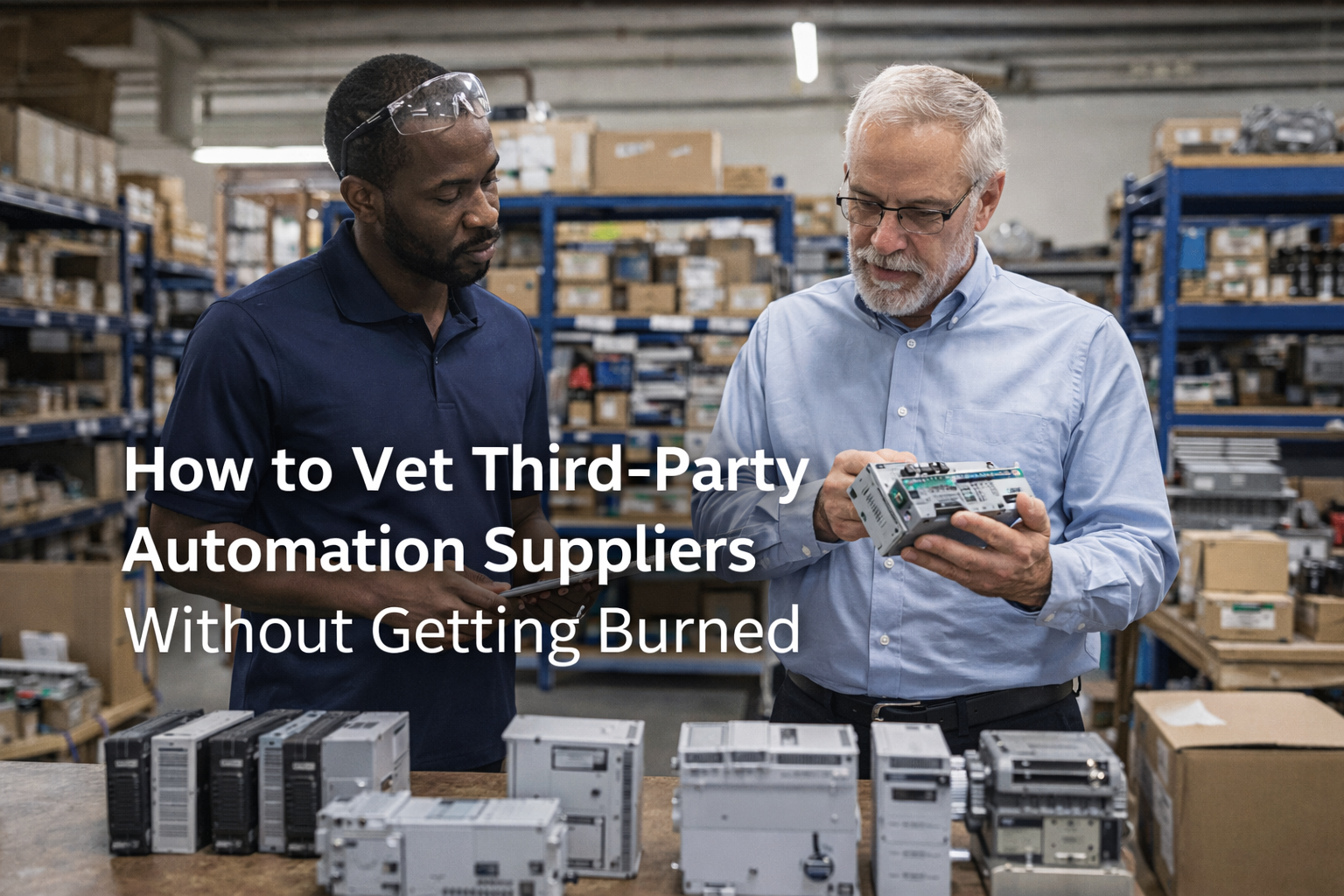
Third-party automation suppliers can be a lifeline or a liability.
When OEM lead times stretch into months, budgets tighten, or legacy equipment needs support, many manufacturers turn to independent suppliers to keep production moving. Sometimes it works perfectly. Other times, it leads to incorrect parts, missing documentation, warranty disputes, or repeat failures that cost more than waiting ever would have.
The difference is rarely luck. It comes down to how well the supplier was vetted before the purchase.
This guide walks through how to evaluate third-party automation suppliers with clarity and confidence so you reduce risk without cutting yourself off from valuable sourcing options.
Third-party suppliers fill gaps the OEM channel cannot always address. Discontinued products, long lead times, emergency replacements, and budget constraints all push manufacturers to look beyond authorized distribution.
In many cases, this is the right move. Independent suppliers often specialize in legacy hardware, maintain broader inventories, and respond faster in urgent situations.
The risk is not using third-party suppliers. The risk is using the wrong ones.
Not all third-party automation products are the same, even when the part number matches.
Before evaluating a supplier, clarify how they source and handle the equipment they sell. This context matters more than price.
Key questions you should be able to answer include:
If a supplier cannot clearly explain what they are selling, that is an early warning sign.
Price is easy to compare. Transparency is harder and far more important.
Reliable third-party suppliers are upfront about condition, testing process, warranty terms, and limitations. They do not rely on vague labels or buried fine print.
You should expect clear answers to basic questions such as:
If responses feel evasive, rushed, or overly generic, treat that as signal, not noise.
One of the biggest mistakes buyers make is assuming every automation supplier understands the products they sell.
A strong website or fast quote turnaround does not guarantee technical competence.
Before relying on a supplier in a critical situation, test their technical depth with practical questions:
Suppliers who sell first and troubleshoot later often create downstream problems that cost far more than the original purchase.
Warranty is not just about length. It is about clarity and enforcement.
A one-year warranty that excludes everything meaningful is worse than a shorter warranty that is clearly honored.
When vetting a supplier, confirm:
Suppliers who stand behind their products do not make warranty processes difficult or ambiguous.
Many issues arise not from bad parts, but from bad assumptions about availability.
Ask whether inventory is physically in stock, drop-shipped, or brokered after the order is placed. These differences matter during emergencies.
Reliable suppliers can clearly state:
If everything is always “available” with no proof, caution is warranted.
Online reviews and ratings can be helpful, but they should not be taken at face value.
Look for patterns rather than isolated complaints or praise. Pay attention to how suppliers respond to problems, not whether problems ever occur.
Strong indicators of credibility include:
No supplier is perfect. How they handle issues matters far more than whether issues happen.
The worst time to evaluate a supplier is during a plant-down emergency.
Whenever possible, place a low-risk or non-critical order first. Use that experience to assess communication, packaging, accuracy, and follow-through.
Suppliers who perform well when the pressure is low are far more likely to perform well when it matters most.
Some warning signs consistently precede bad outcomes.
Seeing one red flag does not always mean walk away. Seeing several usually does.
The goal of using third-party automation suppliers is not just faster access or lower cost. It is reliable recovery, continuity, and confidence.
When vetted properly, third-party suppliers become a strategic asset rather than a gamble.
Industrial Automation Co. works with manufacturers every day to help identify reliable sourcing options, verify compatibility, and avoid common third-party pitfalls.
If you want a second opinion before committing to a supplier or need help sourcing a critical component safely, reach out to our team. A short conversation can prevent long downtime.
 2 Year Warranty on ALL products