How Tariffs, Geopolitics, and Reshoring Are Changing Automation Buying Decisions
by Bryan Hellman
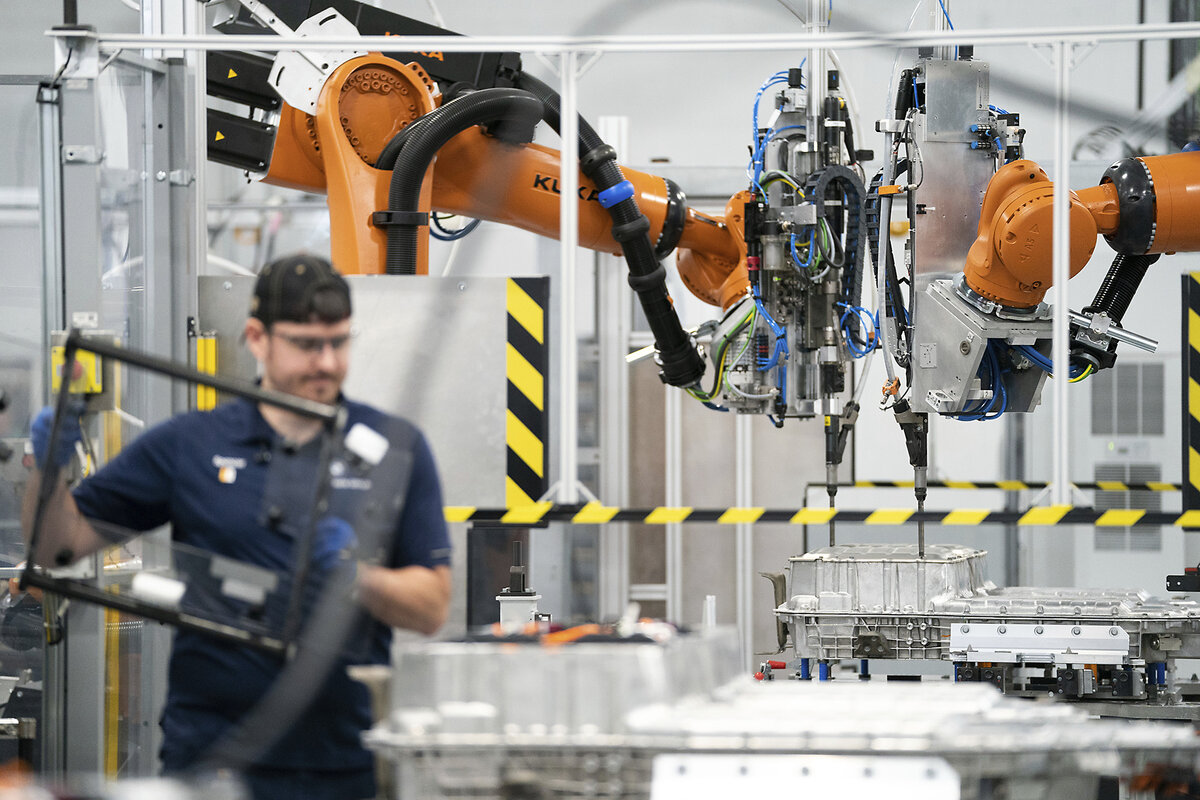
Modern industrial robots in action on a U.S. production line – the front line of reshoring competitiveness in a tariff-impacted world.
Plant engineers, reliability managers, and procurement teams in U.S. manufacturing face a rapidly shifting environment in 2025–2026. Persistent tariffs on imports—particularly from China—combined with geopolitical tensions and accelerating reshoring efforts are forcing reevaluation of automation investments. What once prioritized lowest unit cost now balances supply chain resilience, tariff exposure, lead-time certainty, and long-term total cost of ownership.
Tariffs on electronics, machinery components, semiconductors, and related goods have raised effective import costs significantly, often 20–100%+ in targeted categories. This directly affects PLCs, drives, sensors, robotics, and edge devices sourced from Asia. At the same time, reshoring announcements exceed trillions in committed capital since early 2025, driven by policy incentives and risk aversion. These shifts demand automation purchases that support higher domestic labor productivity, faster deployment, and reduced foreign dependency.
The core question for technical decision-makers: How do you select automation solutions that protect against ongoing volatility while delivering measurable ROI in a reshoring context?
The Current Tariff and Geopolitical Landscape Affecting Automation
Tariffs remain elevated and unpredictable, with average effective rates climbing sharply in 2025 and continuing into 2026. Key impacts on automation buying include:
Direct cost increases on imported components. Many industrial controllers, HMIs, variable frequency drives, and vision systems incorporate semiconductors and subassemblies subject to Section 301 tariffs or broader measures. A 25–60%+ duty layer erodes margins on equipment assembled overseas, pushing landed costs higher even for "domestic" branded products with global supply chains.
Lead-time and availability risks. Geopolitical flashpoints—export controls on advanced chips, rare earth restrictions, and regional disruptions—create spot shortages for critical automation parts like high-performance processors used in motion control and AI-enabled inspection.
Broader supply chain reconfiguration pressure. Manufacturers front-load purchases to beat tariff deadlines, then face inventory overhang or obsolescence when policies shift. This volatility discourages speculative buys and favors modular, upgradable systems over locked-in proprietary architectures.
These factors make purely price-driven sourcing riskier. Teams now weigh tariff-avoidance value against performance and support.
Why Reshoring Accelerates Automation Investment
Reshoring demands scale: advanced robotics across entire production lines to offset domestic costs and build resilience.
Reshoring viable production to the U.S. or nearshore locations (Mexico, Canada) requires offsetting higher domestic labor and energy costs. Automation becomes the primary lever:
Labor productivity gap closure. U.S. manufacturing wages average $25–30/hour versus $6–7 in key offshore regions. Advanced robotics, cobots, and automated material handling can deliver 3–5× output per worker, making domestic lines competitive once subsidies and tax credits phase out.
Supply chain resilience priority. Proximity reduces transit risks, customs delays, and exposure to international disruptions. Facilities near engineering teams enable faster iteration on custom automation solutions.
Quality and compliance advantages. Tighter control over processes supports traceability for regulated sectors (e.g., medical devices, EVs, aerospace) and reduces rework from variable overseas quality.
Surveys show 30–50% of manufacturers actively exploring or executing reshoring, with automation cited as essential for financial justification. Without it, many projects fail post-incentive periods.
How Buying Decisions Are Evolving in Practice
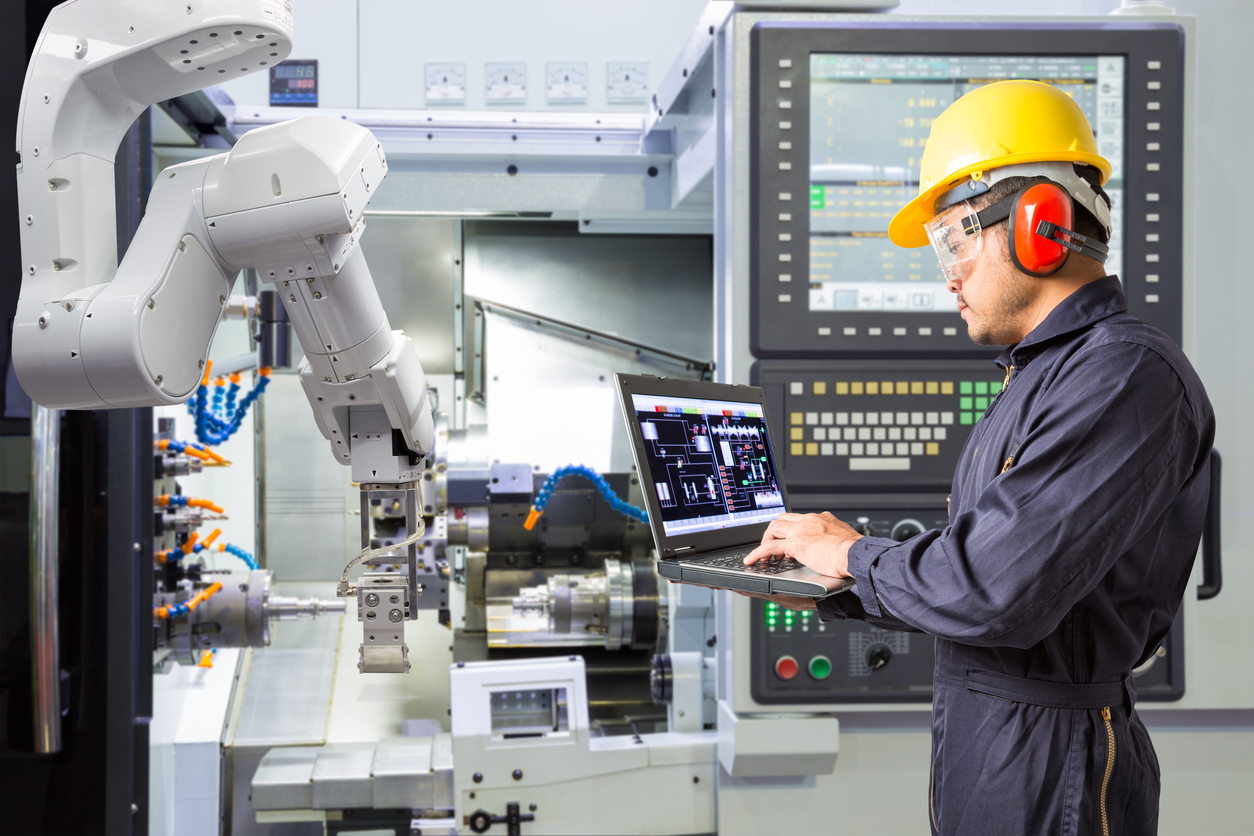
Local engineering teams collaborating with automation systems – critical for rapid deployment in reshored facilities.
Technical teams are shifting evaluation criteria in measurable ways:
Total landed cost over unit price. Factor in projected tariffs, freight volatility, and potential duties on spares. Solutions with strong North American manufacturing footprints or regional assembly options gain preference—even at 10–20% higher base price—due to predictable costs and shorter lead times.
Modularity and future-proofing. Favor open-architecture systems using standards (OPC UA, MQTT) that allow incremental upgrades without full replacement. This mitigates obsolescence risk if tariffs target specific component categories or force supplier changes.
Domestic or allied sourcing emphasis. Prioritize vendors with U.S./NAFTA-region production for controllers, I/O, and enclosures. Robotics and vision systems from non-tariffed regions (e.g., Europe, Japan, or emerging North American capacity) reduce exposure compared to heavy China reliance.
Scalability for phased deployment. Reshoring often starts with pilot lines or brownfield retrofits. Buyers select automation platforms that scale from single-cell monitoring to full-line integration without major re-architecture, enabling faster ROI validation.
Support ecosystem strength. Local engineering, rapid parts availability, and on-site service matter more when global logistics face delays. Vendors with robust U.S. distribution and training networks lower MTTR during ramp-up.
These changes reflect a move from globalization-optimized to resilience-optimized procurement. Projects that once targeted 18–24 month payback now aim for 12–18 months through avoided downtime, tariff savings, and productivity gains.
Common Pitfalls and Mitigation Tactics
Several recurring issues trip up teams navigating this landscape:
Over-relying on short-term tariff relief. Temporary exclusions or pauses lead to complacency; build models assuming sustained or escalating duties.
Underestimating automation complexity in reshoring. New U.S. facilities often lack legacy integration experience. Solution: Select vendors offering strong commissioning support and simulation tools to de-risk deployment.
Ignoring workforce readiness. Modern automation demands digital skills. Pair investments with upskilling programs to avoid underutilization.
Chasing lowest initial bid without lifecycle analysis. Cheap imported gear may trigger higher long-term costs via duties, downtime, and rework. Use TCO models incorporating tariff scenarios and resilience metrics.
Proactive teams run sensitivity analyses: "What if tariffs rise another 20%?" or "What if lead times double?" This identifies truly robust options.
Metrics That Matter in the New Environment
Track these to quantify decisions and build internal justification:
Tariff exposure reduction (percentage of spend shifted to non-tariffed sources).
Lead-time variability (standard deviation of delivery times pre- vs. post-change).
Productivity per labor hour post-automation deployment.
Unplanned downtime cost avoidance from more reliable local spares and support.
Payback period under conservative tariff assumptions.
Supply risk score (weighted index of geopolitical, tariff, and single-source exposure).
Facilities achieving 15–25% OEE gains through targeted automation often see positive ROI within 12–18 months, even with higher upfront costs, thanks to avoided import penalties and faster response to demand shifts.
Positioning for Long-Term Advantage
Tariffs, geopolitics, and reshoring are not transient noise—they represent a structural reset toward regionalized, resilient manufacturing. Automation buying decisions now center on enabling that transition: solutions that deliver high productivity, modular scalability, predictable costs, and minimized external risks.
At Industrial Automation Co., we help teams navigate these exact tradeoffs daily—mapping current exposure, modeling scenarios, and selecting architectures that support both immediate needs and strategic reshoring goals. The winning approach treats automation as a strategic enabler of domestic competitiveness, not just a cost center.
Start by auditing your current automation bill of materials for tariff/geopolitical exposure and defining must-have resilience attributes. The right choices today build defensible operations for the decade ahead.


 2 Year Warranty on ALL products